
Narrative Systems
NON-COMBAT ENCOUNTERS (NCEs)
In Dark Ocean there are 2 main types of Non-Combat Encounters (NCEs): Social and Environmental. They’re both built upon the same event system and share some similarities.
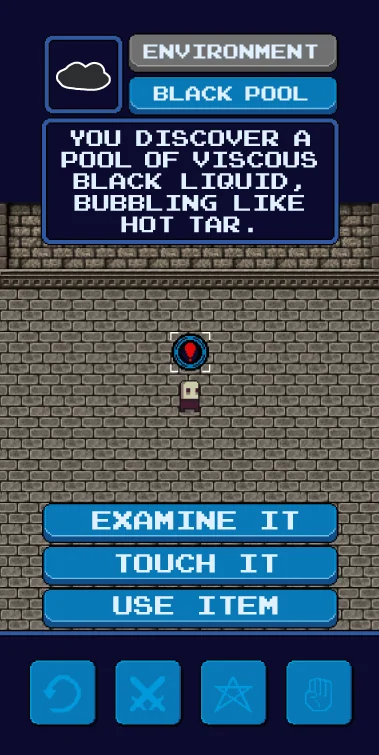
(early Pyxel concept)
ENVIRONMENTAL
Environmental NCEs display as a Beacon (exclamation mark icon) that players can approach and interact with, similar to NPCs though with slightly different options. They occupy one cell and can remain hidden until the player comes in range and passes a hidden Insight check. When approached, these Environmental NCEs display descriptive narration, allowing the action to unfold in the player’s mind while presenting them with a few options. “Use Item” will always be among those options; choosing this option will then present the player with a list of the items in their inventory. The player can attempt to use any item to solve the encounter, though only a few might have a scripted solution. Any item that does not have a solution scripted for it, will simply display a fairly generic “can’t use that” message. This creates the sense of a much broader possibility space, even if only a few items have scripted solutions. It also challenges players to think about how different items can be used, as any item could be the key to progressing ahead.
SOCIAL
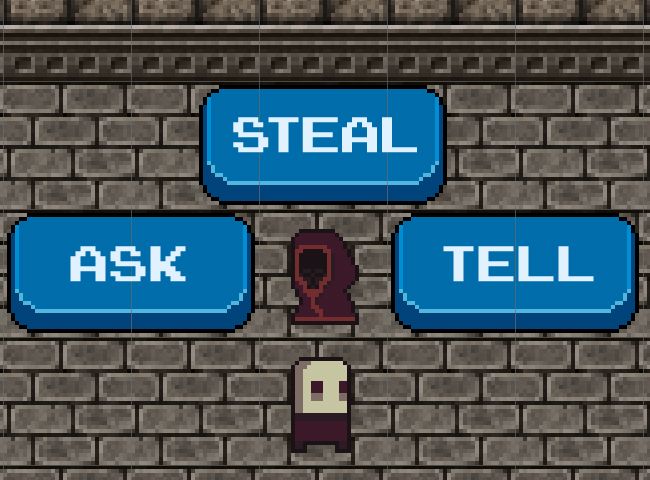
A typical Social Encounter begins when you tap on an NPC. Buttons appear around them, usually at least 2, Ask and Tell. Much of the dialog just follows this flow, choosing at random to progress until no options are left. Occasionally NPCs may present other possible verbs. These options are a bit more intentional like Steal, Lie, Threaten, Give or Knock Out. Each option chosen is recorded into your conversation, inscribing a transcript of your conversation, for later reference.
INK SAMPLE
Below is a rough sample of the Ink file for the purposes of critique, with placeholders for gameplay sections. The top-level knot for each NPC serves as a content-distributor, handling all the logic. It then presents the ASK and TELL options if they are available, otherwise it shows the CONTINUE option. LEAVE is there just to simulate the player walking away at any point. When the player chooses ASK or TELL, they are served the appropriate content block (A1, T2, etc.) depending on game state and what content they’ve seen so far. Through the conditional statements you can achieve a lot of different structures to each dialog flow. It also makes use of some functions, which are setup for later extensibility.
Press ▶︎ Play to test in frame:
https://snippets.borogove.app/ink/q7fzx4
DREAMING
(A Roguelike run within a Roguelite)
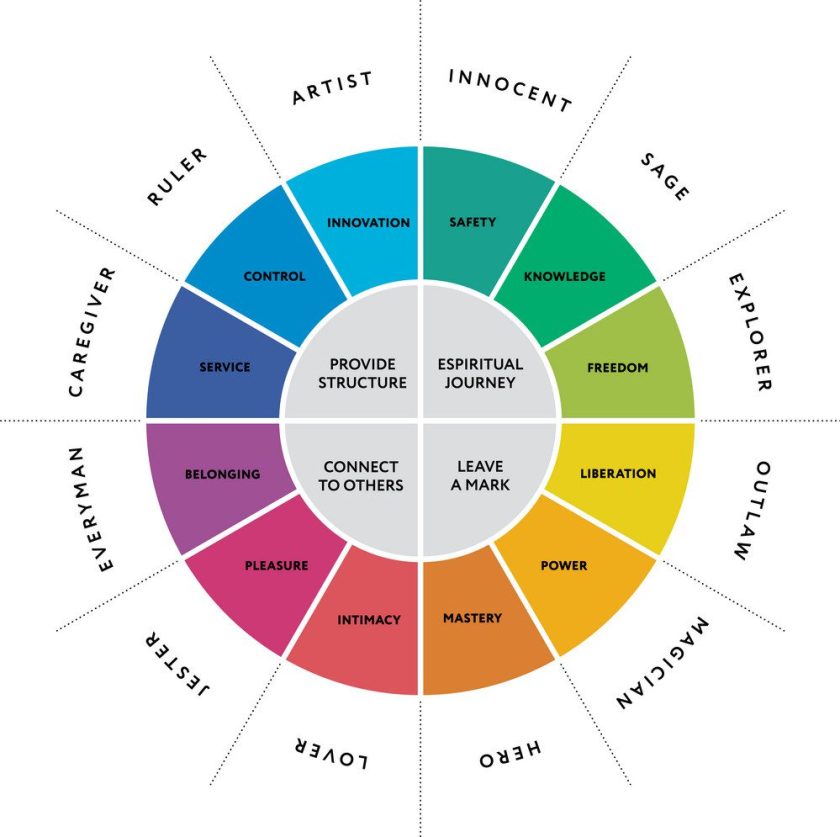
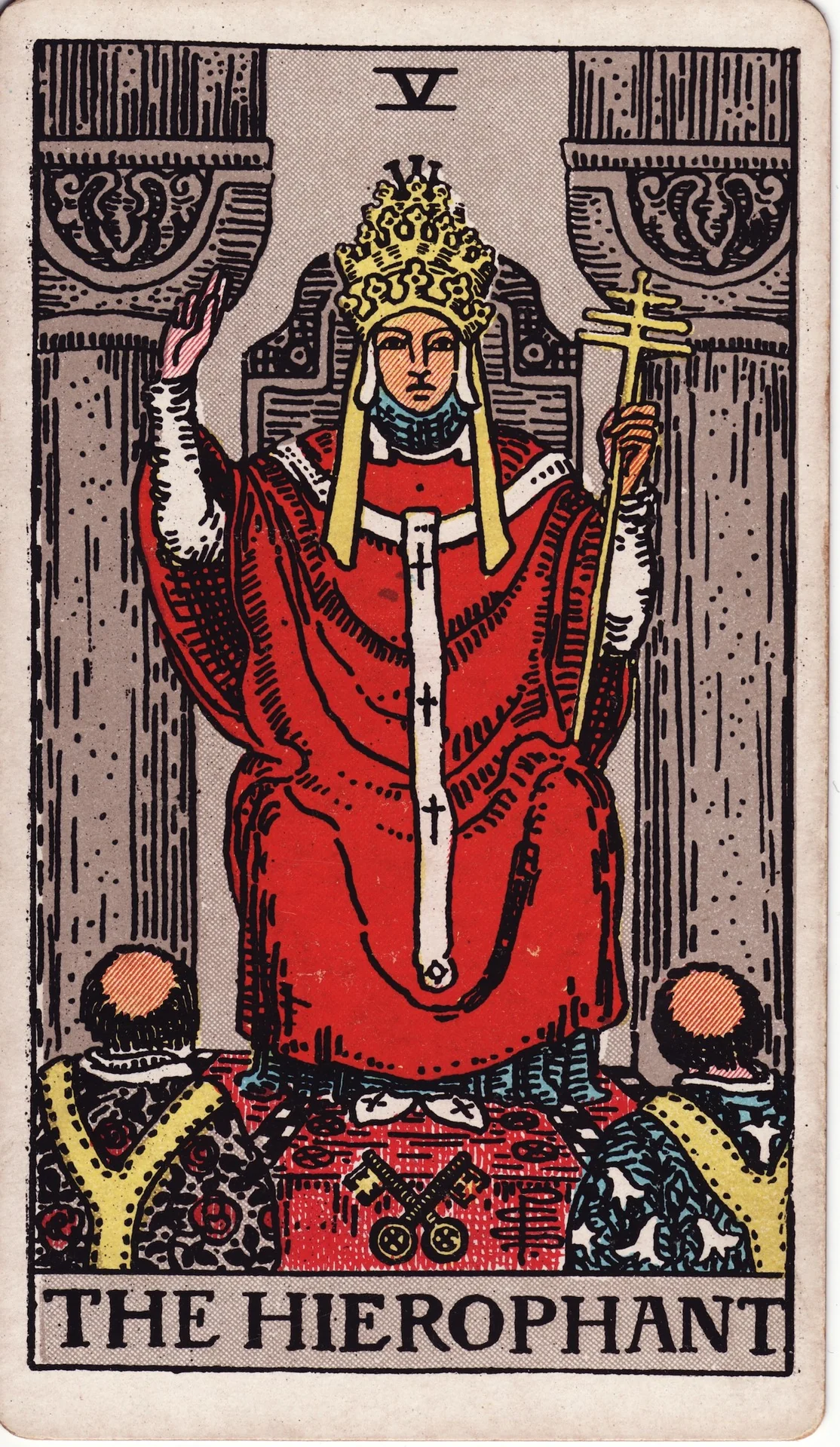
One of the central themes of this game is Dreams. On this world, Humans are the only ones that sleep and as such, are the only ones who dream. Elves have long studied this phenomenon, but its purpose eludes even the wisest of scholars. In game, sleeping is used to recover Health and Stamina, making it a crucial mechanic. When you sleep, you find yourself in a blank void. Your character can move through this void and find new paths that lead to different dream-biomes. Each has handcrafted levels with room to extend them through adding procedurally generated areas. The NPCs that can appear in these places vary and reflect aspects of your character established throughout your quest. These characters represent the 12 archetypes (framework used in branding, inspired by Carl Jung). These personae correspond to cards in a Divination Deck (similar to Tarot) that come up in readings with a Diviner NPC. This will be one of the ways we can learn about your character’s history.
ARCHETYPES
| CARD | ARCHETYPE |
| The Hierophant | Magician |
| The Child | Innocent |
| The Fool | Jester |
| The Wanderer | Explorer |
| The Physician | Caregiver |
| The Skeptic | Everyman |
| The Exile | Outlaw |
| The Shepherd | Ruler |
| The Lovers | Lover |
| The Scholar | Sage |
| The Builder | Artist |
| The Hunter | Hero |